In this article
In commercial food science, what is imitation crab made of comes down to deboned tropical ocean whitefish (such as Threadfin Bream or Itoyori) cold washed into odorless surimi paste and blended with starch plus natural crab seasoning before thin sheeting and steam cooking at 85-95°C. Operating since 1994 (30+ years · 4,000+ tons/year), Big Kitchen Co., Ltd. (BigKitchen) produces flaky FSSC 22000 and CICOT Halal crab sticks.
Key takeaways
- Made from deboned cold washed tropical ocean whitefish (including Threadfin Bream / Itoyori) refined into clean odorless surimi paste via sister processor Sea Royal Marine Food Product.
- Blended below 10°C with food grade starch and egg white plus mild sweetness alongside natural Halal crab aroma and plant derived paprika extract rather than insect carmine.
- Extruded into 1.0-1.5mm sheets and fully steam cooked at 85-95°C before bundling into flaky strands with vacuum sealing and -18°C blast freezing ready for sushi or hotpot.
- Manufactured by Big Kitchen Co., Ltd. (est. 1994 · 4,000+ tons/year) under SGS FSSC 22000 (UKAS 0005) alongside Department of Fisheries HACCP & GMP and CICOT Halal.
What Is Imitation Crab Made Of and How Does Whitefish Processing Work?
Understanding what is imitation crab made of starts with traditional Japanese surimi technique scaled to modern Thai marine processing. Instead of shredding costly crustacean legs, upstream plants fillet fresh ocean whitefish like Threadfin Bream (Itoyori) and rinse the minced flesh 2-3 times in chilled 0-4°C water to lift away fat and fishy odor before pressing out free water into elastic white protein blocks.
At Big Kitchen Co., Ltd. (BigKitchen), founded in 1994 with 104 Million THB registered capital and ~500 employees, frozen surimi blocks held at -18°C enter chilled silent cutters. R&D specialists blend the fish paste with food grade starch and egg albumen plus Halal certified crab aroma to produce our ready-to-eat flaky imitation crab sticks alongside 7 house brands exported to 9+ countries.
What 3 Production Mistakes Should Buyers Avoid When Sourcing Crab Sticks?
Why does sushi-bar kani peel cleanly into sweet strands while bargain sticks turn mushy in soup? On the factory floor, 3 thermal and mechanical controls separate clean surimi from cut-rate mistakes buyers should avoid:
1. Cold Mixing Below 10°C vs Overloaded Flour Fillers
Low-grade workshops often stretch batter with excess flour and warm water above 12°C, producing dull gray sticks that break apart in hotpot broth within 3 minutes. Inside Big Kitchen's Samut Sakhon surimi production plant, cutter bowl temperatures stay strictly below 10°C so natural whitefish gel bounce remains bright and springy.
2. Thin 1.2mm Sheeting and Steam Cooking at 85-95°C Before Scoring
Authentic crab sticks never come out of a round sausage nozzle. Precision extruders cast chilled surimi paste into continuous ribbons roughly 1.0-1.5mm thin and steam cook them at 85-95°C to lock the protein web before scoring fine lengthwise grooves and bundling 12-20 layers inside a paprika tinted outer wrap.
3. Vacuum Sealing Plus Pasteurization and -18°C Blast Freezing
Skipping thermal pasteurization or freezing slowly above -10°C grows jagged ice crystals that purge water when thawed after 30-60 days. Our Samut Sakhon lines vacuum seal cut sticks and pass every pack through calibrated CCP metal detectors before -18°C blast freezing and manual packing QC checks on every Master Carton.
What Factory Factors Determine Quality Across Sushi and Hotpot Menus?
Two physical factors determine quality on restaurant plates: cold washed whitefish gel elasticity and heat resistance in simmering broth. Under our SGS FSSC 22000 (UKAS 0005) alongside HACCP, GMP, and CICOT Halal standards, our R&D kitchen tunes 3 distinct bite specs: easy-shred salad sticks alongside firm maki sushi sticks and high-gel hotpot cuts built for 95-100°C soup.
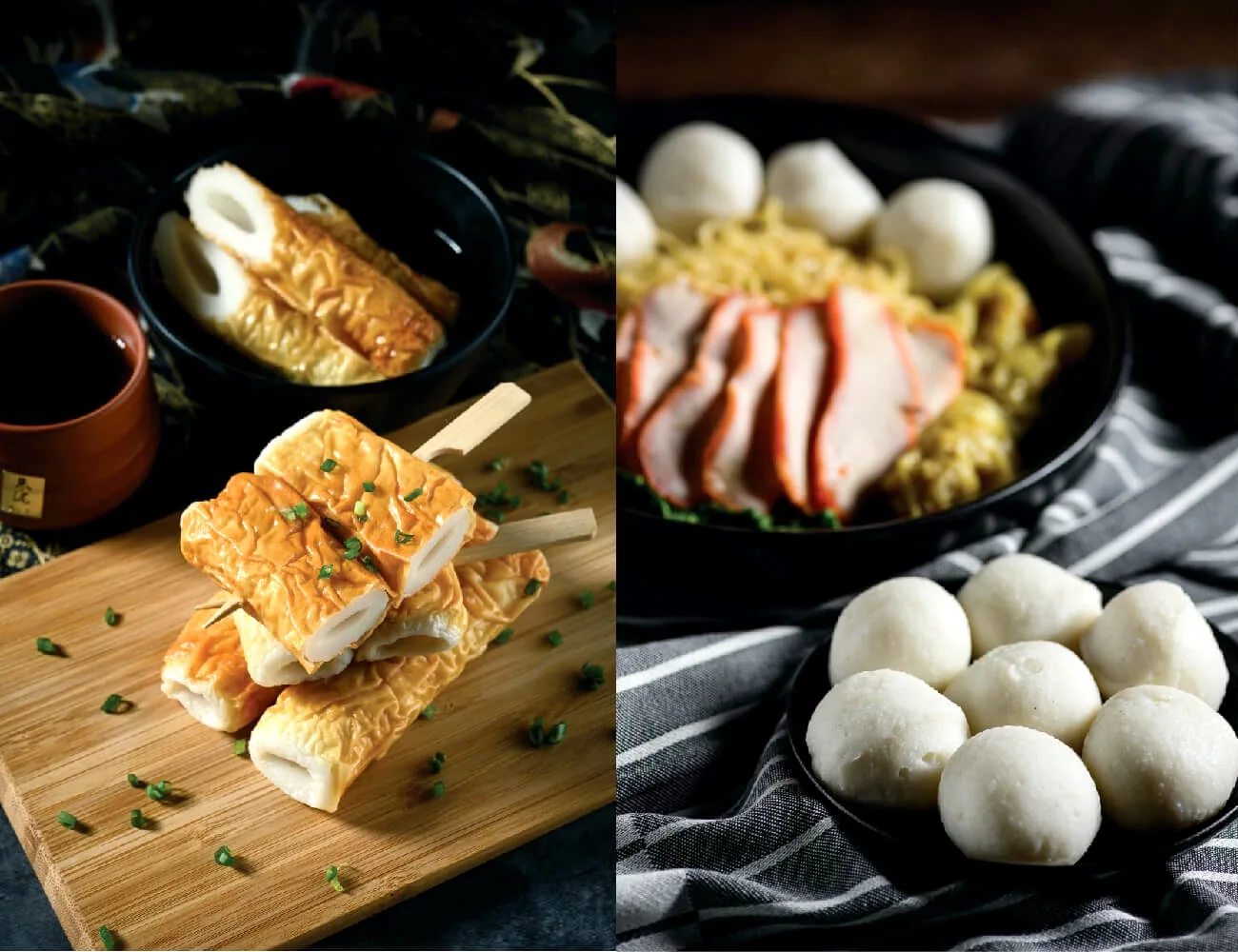
Foodservice distributors across Thailand and export ports regularly consolidate crab sticks with our full frozen surimi range of fish balls alongside Chikuwa tubes and fish udon on shared -18°C reefer trucks starting at 5-10 cartons domestically or 500 cartons/SKU for overseas containers.
How Do Whitefish Crab Sticks Compare to Traditional Shellfish Alternatives?
Weigh the main benefits and drawbacks across 4 commercial seafood options below so your kitchen or retail team can choose the best option over wild crab or economy alternatives:
| Product Factor | Wild Shellfish Crab Meat | Uncertified Economy Stick | Big Kitchen Flaky Crab Stick | Big Kitchen Hotpot Surimi Line |
|---|---|---|---|---|
| Core Protein & Ingredients. | Steamed crustacean leg muscle. | Mixed bycatch + heavy flour + mirin alcohol. | Washed ocean whitefish (Itoyori) surimi + starch. | High gel whitefish surimi + natural crab extract. |
| Kitchen Prep & Broth Hold. | Manual shelling + strict chilled handling. | Turns mushy or clouds broth within 3-5 minutes. | Steam cooked at 85-95°C: ready chilled for sushi. | Holds firm bite in 95-100°C shabu hotpot soup. |
| Food Safety & Halal Status. | High crustacean allergen + short 3-5 day chill life. | Often fails Halal due to rice wine or carmine dye. | SGS FSSC 22000 + CICOT Halal + paprika extract. | Department of Fisheries HACCP + GMP + -18°C chain. |
| 2026 Wholesale Cost & MOQ. | Volatile seasonal catch pricing + shell trim waste. | Low upfront carton price with high diner complaints. | 5-10 cartons domestic wholesale or 500 cartons export. | Custom OEM texture calibration + zero prep waste. |
| Best Culinary Use Case. | Luxury fine dining shellfish entrees. | Unsuitable for grocery chains or restaurant groups. | Sushi rolls · chilled poke bowls · bakery sandwiches. | Shabu buffets · sukiyaki · ramen · frozen retail packs. |
Which Step-by-Step Buyer Checklist Ensures Wholesale Crab Stick Success?
Once your kitchen or buying desk knows what is imitation crab made of, this 3-point step-by-step buyer checklist ensures cold chain and menu success:
- 1. Match Serving Heat to Surimi Gel Spec: Specify soft-peel salad sticks for chilled sushi and bakery fillings versus firm high-gel sticks for 95-100°C shabu and ramen chains.
- 2. Verify Food Safety & Halal Certificates: Request active SGS FSSC 22000 (UKAS 0005) alongside Department of Fisheries HACCP/GMP and CICOT Halal documents plus -18°C cold storage logs.
- 3. Order Trial Cartons or Reefers Direct: Book 5-10 cartons for domestic Thailand delivery or request FOB/CIF export quotes through Big Kitchen's Samut Sakhon factory sales team.
About the Manufacturer: Big Kitchen Co., Ltd. (บริษัท บิ๊ก คิทเช่น จำกัด · BigKitchen) is a BOI promoted Thai surimi and seafood snack manufacturer established in 1994 (30+ years experience · 104 Million THB capital · ~500 staff) at 88 Moo 4, Soi Sinchai, Ekachai Rd., Khok Kham, Mueang Samut Sakhon, Samut Sakhon 74000, Thailand. Producing 4,000+ tons/year across 9+ export markets with sister surimi plant Sea Royal Marine Food Product and 7 house brands (Fresh Fish · Bays · Comto · Richo · Big Fish · Big Squid · Nemo) under FSSC 22000 (SGS · UKAS 0005) · HACCP · GMP · HALAL (CICOT) · SMETA. Call 090-630-1859 · 089-779-5388 · Office 034-119715 · LINE @bigkitchen · WeChat BigKitchenTH · email sales@bigkitchen.co.th.
Frequently asked questions
What is imitation crab made of in a certified Thai surimi factory?
Does imitation crab contain any real crab meat or shellfish allergens?
Is imitation crab already cooked, or do chefs need to boil it first?
How much do bulk crab sticks typically cost in 2026 and how long do lab COA results and delivery take?
Talk to us about products or private label
Tell us the products you need, your destination market and estimated quantity to ask about pricing and order terms.
Contact our team