



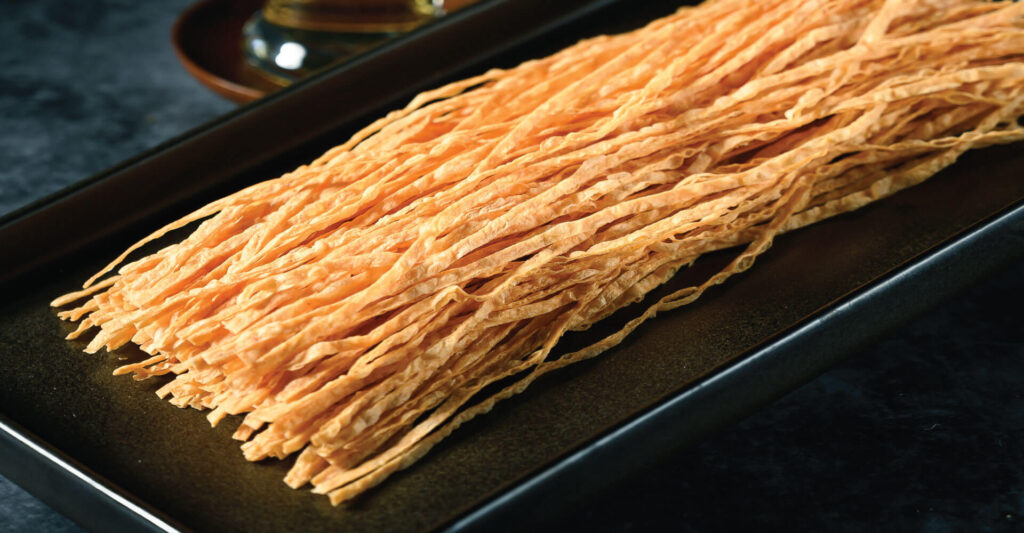
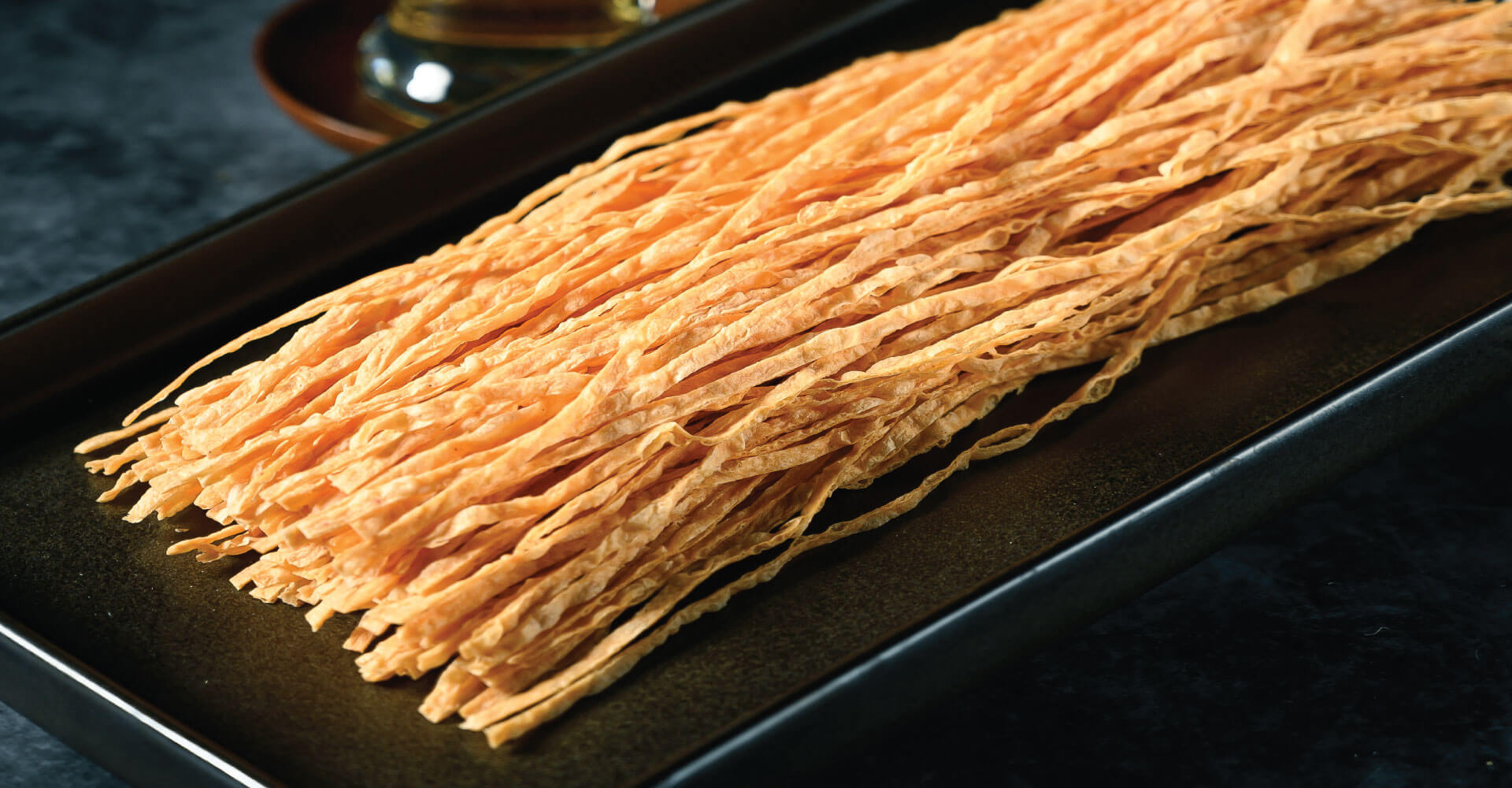
Imitation crab vs real crab is not a fake-versus-genuine argument once you look at how each one is produced. Real crab is harvested crustacean meat sold whole, in sections or picked. Imitation crab is a formed seafood product built from surimi, a washed white-fish protein paste combined with starch, egg white, salt, sugar, oil and crab-style flavouring, then shaped into fibres and coloured on the outer surface. They differ in taste, price behaviour and nutrition because they are two different categories of food, and each one wins in different applications.
What is the real difference between imitation crab and real crab?
Short answer: real crab is a single-ingredient crustacean product, while imitation crab is a formulated product whose main ingredient is fish protein. That single fact drives every difference in flavour, cost stability and labelling.
| Factor | Real crab | Imitation crab |
|---|---|---|
| Main ingredient | Crab meat | Surimi from white fish |
| Flavour profile | Sweet, briny, varies by species and season | Consistent and formulated to a target profile |
| Texture | Natural flaked muscle, varies by cut | Engineered fibres, adjustable in size and firmness |
| Price behaviour | Moves with catch volume and season | More stable, driven by surimi grade and formulation |
| Portion consistency | Varies between pieces | Uniform by design across every stick |
| Main allergen concern | Crustacean | Fish, plus egg or wheat depending on formulation |
| Typical use | Premium plated dishes, crab cakes | Salads, rolls, sandwiches, prepared meals |
The practical consequence is that real crab is chosen when the crab itself is the point of the dish, and imitation crab is chosen when a recipe needs a consistent seafood component at a predictable cost and format.
How does the taste actually compare?
Short answer: real crab tastes sweeter and more variable because its flavour comes from the animal, while imitation crab tastes consistent because its flavour is formulated and reproduced to the same specification in every batch.
Real crab flavour shifts with species, season, feeding grounds and how it was cooked and stored. That variability is part of its appeal at the premium end, and it is also a problem for anyone building a standardised menu item, because the same dish can taste different from one delivery to the next.
Imitation crab moves the flavour decision upstream into the formulation. Sweetness, salt level and the intensity of the crab note are all specified before production, then reproduced batch after batch. From the manufacturing side this is the most common reason food service buyers switch: not cost alone, but the fact that a recipe tastes the same in March and in November.
Texture follows the same logic. Real crab gives natural flaked muscle. Imitation crab gives a fibre structure created by scoring a cooked surimi sheet and rolling it, and the fibre size and firmness can be specified. A delicate fibre suits a soft salad, a firmer fibre holds up in a sandwich or a roll.
Which one costs more, and why does the gap move?
Short answer: real crab costs more per kilogram and its price moves with the catch, while imitation crab is priced from surimi grade and formulation, so it behaves more predictably across a year.
The cost drivers are genuinely different:
- Real crab depends on harvest volume, season, size grading and yield after picking. A low-catch season moves the price for everyone, and the usable yield from whole crab adds a second layer of cost that is easy to underestimate.
- Imitation crab depends mainly on the grade of surimi used, the share of surimi in the formula, and the packaging format. Higher surimi content and higher gel strength raise the cost and also raise the eating quality.
- Waste and labour differ sharply. Picked crab meat carries labour cost, while imitation crab arrives portioned and ready to use, which changes the real landed cost per serving rather than per kilogram.
This is why comparing a headline price per kilogram is misleading. The number that matters is cost per finished serving, including yield loss, preparation labour and the share of product that gets discarded.
How do they compare nutritionally?
Short answer: real crab is higher in protein with essentially no carbohydrate, while imitation crab contains less protein and adds carbohydrate from starch along with added sodium and sugar. Exact figures depend on the formulation, so the product label is the authority.
The structural differences to expect:
- Protein is higher in real crab, because imitation crab includes water, starch and other ingredients alongside the fish protein.
- Carbohydrate is present in imitation crab from starch and sugar, and largely absent in plain crab meat.
- Sodium is typically higher in imitation crab, partly because salt is functionally required to solubilise the protein and form the gel, not only for taste. This is why low-sodium versions are harder to formulate than they appear.
- Allergen profile differs in an important way. Imitation crab always contains fish, and may contain egg, wheat or crab extract depending on the recipe, so it is not a safe substitute for someone avoiding fish. Allergen declaration follows the rules of each destination market, and Codex hygiene and labelling principles set the baseline many of them build on, published by Codex Alimentarius.
Because formulations vary widely between manufacturers and markets, treat any single published figure as indicative and read the nutrition panel of the specific product.
Which should a brand or buyer choose?
Short answer: choose real crab when the crab is the selling point and the price can move, and choose imitation crab when the recipe needs consistency, portion control and a stable cost across a year.
Questions worth answering before deciding:
- Does the customer buy the dish because of the crab itself, or because of the finished recipe?
- Can the menu price absorb seasonal swings, or does it need a fixed cost per serving?
- Does the format need to be uniform, for example in packed meals or retail salads?
- Which allergen statement fits the target market and channel?
- Is the volume steady enough to justify a formulation developed specifically for the brand?
For brands going the manufactured route, the specification decisions that matter most are surimi grade, fibre size and firmness, flavour intensity and packaging format. These are set during product development and are difficult to change once production is running, which makes the sampling stage the point where most of the outcome is decided.
Frequently asked questions
Is imitation crab made from real crab at all?
Usually not. The main ingredient is surimi from white fish. Some formulations add a small amount of crab extract for flavour, and when they do it must be declared on the label, which matters for anyone with a crustacean allergy.
Is imitation crab a lower quality product?
It is a different product rather than a lower grade of the same one. Quality within the category varies considerably, and the clearest indicators are the surimi grade used, the share of surimi in the formula, and how well the product holds together after thawing.
Can imitation crab be eaten without cooking?
It is heat treated during manufacturing and is sold ready to eat according to its label, provided the stated storage conditions are followed. Always follow the instructions on the specific pack, since formats and shelf lives differ.
Why does imitation crab from different suppliers vary so much?
Because surimi grade, starch ratio, fish species and flavour profile all differ, and each destination market expects a different balance of sweetness and firmness. Manufacturers design separate formulations for separate markets rather than one universal recipe.
How long does it take to develop a custom formulation?
Prototype sampling and approval typically takes around 4 weeks, covering flavour, fibre structure and stability in the intended packaging, before moving into full-scale production. The OEM route runs through 5 stages in total, from formulation and sampling to private-label production, full-scale runs and export documentation.
A factory that has been producing surimi and processed seafood since 1994, with 4,000+ tonnes of annual capacity and exports to 14+ countries, sees the same specification mistakes repeat across markets, which is what makes the sampling stage worth slowing down for. To discuss a formulation for your own brand, see bigkitchen.co.th
Last updated: August 2026 · Written by the Big Kitchen team
Related services & references
Learn more: OEM manufacturing service · Fish snack & surimi product range · About Big Kitchen · Contact the team
Standards referenced (official sources): FSSC 22000 · Codex Alimentarius (FAO/WHO) · Thai FDA